

Not every roofing problem announces itself with a visible leak or a water stain on the ceiling. In fact, some of the most damaging roof problems develop quietly, allowing moisture to enter beneath the roofing materials and affect the underlying structure for weeks or even months before homeowners notice anything unusual.
You might have shingles that appear perfectly intact from the ground while water is slowly damaging the roof decking, soaking the insulation, or affecting the wooden components inside your attic. By the time a stain appears on an interior ceiling or a musty smell becomes noticeable, the original problem may have already spread beyond the area where moisture first entered. For homeowners in Denver and throughout Colorado, this possibility deserves particular attention. Hailstorms, strong winds, heavy snowfall, and repeated temperature changes can compromise roofing materials and create openings that are not always easy to identify during a routine visual inspection.
Understanding how hidden roof water damage develops, recognizing its warning signs, and knowing when to schedule a professional inspection can help protect your home from more extensive repairs.
How Can Water Damage Develop Behind a Roof Without Being Visible?
A residential roofing system consists of several layers that work together to keep moisture outside the home. Asphalt shingles or other exterior roofing materials provide the first line of protection, while underlayment, flashing, roof decking, and properly designed drainage details help prevent water from reaching the interior structure.
However, even a relatively small failure in one of these components can allow moisture to enter.
For example, a damaged shingle, deteriorated flashing connection, exposed nail, or improperly sealed roof penetration may create an opening where rainwater can get beneath the exterior roofing surface. Once inside, water does not necessarily travel straight down. It can move along the roof decking, follow rafters, collect around insulation, or spread toward other parts of the structure before becoming visible.
This explains why a water stain on a bedroom ceiling does not always indicate that the leak is directly above that location.
In some cases, moisture remains trapped within insulation or wooden components. If the area does not dry properly, repeated exposure can gradually affect the materials without producing an obvious interior leak.
A roof can therefore experience developing moisture damage even when the homeowner has not noticed water dripping into the house.
1. Damaged Roof Flashing Can Allow Water to Enter Hidden Areas
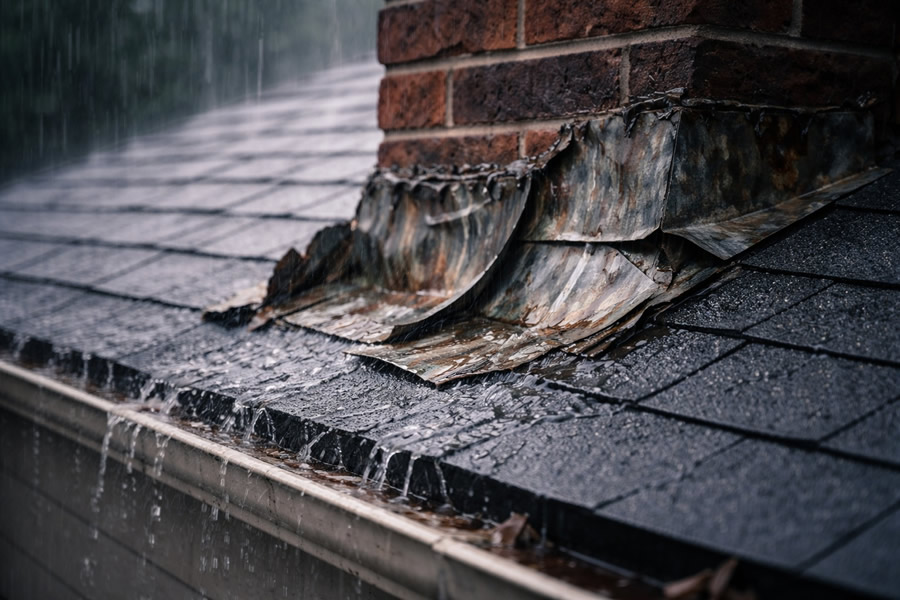
Flashing is one of the most important components of a roofing system because it protects vulnerable transitions and openings where water could otherwise penetrate. It is commonly installed around chimneys, skylights, plumbing vents, walls, valleys, and other areas where different roof surfaces meet.
When flashing becomes loose, corroded, cracked, or improperly installed, water can enter beneath the surrounding roofing materials. The moisture may then travel along the roof structure before reaching an area where it becomes visible. This type of problem can remain unnoticed for an extended period, especially when leaks occur only during heavy rain or wind-driven storms.
Homeowners sometimes assume that flashing problems are minor because the affected area may be relatively small. However, even a limited opening can allow repeated moisture exposure that eventually damages roof decking, insulation, or nearby framing.
A proper roof inspection should include a close evaluation of flashing connections and other vulnerable areas rather than focusing exclusively on the condition of the shingles.
2. Water Can Become Trapped in Roof Decking and Attic Insulation
One reason hidden roof damage can be difficult to detect is that different building materials respond to moisture in different ways.
Roof decking, commonly made from plywood or oriented strand board (OSB), can absorb moisture when water reaches its surface. Repeated or prolonged exposure may cause swelling, deterioration, delamination, or loss of structural integrity. Attic insulation can also become affected. Fiberglass insulation, for example, can lose some of its thermal performance when it becomes wet or compressed. Other insulation materials have different moisture characteristics, but none should be assumed to remain effective when exposed to persistent water intrusion.
The problem is that these materials are usually hidden behind the finished surfaces of the home. You may not notice anything unusual in the living areas until the moisture begins affecting drywall, ceiling materials, or surrounding wood components.
When water damage is suspected, an inspection should evaluate the attic and accessible structural components to determine whether moisture has spread beyond the original entry point.
3. Small Roof Leaks Can Become Larger Problems Over Time
A minor roof leak may not seem urgent if it only occurs during particularly heavy rain. Some homeowners place a container beneath a small ceiling drip or assume that an occasional water stain is something they can address later.
Unfortunately, recurring water intrusion rarely resolves itself.
Each time rain enters through the same opening, moisture can accumulate in materials that have not fully dried. Over time, the affected area may expand, particularly when insulation, wood, or other porous materials remain damp. A small leak can eventually contribute to deteriorating roof decking, damaged ceiling finishes, peeling paint, and conditions that support mold growth.
The longer the source remains uncorrected, the more complicated the repair may become. What could have started as a localized flashing or shingle repair may eventually require replacement of damaged decking, insulation, or interior materials.
This is why investigating the source of a suspected leak early is generally less expensive and more practical than waiting for visible damage to become extensive.
4. Colorado Weather Can Make Hidden Roof Damage More Difficult to Detect
Denver homeowners experience several weather conditions that can contribute to roofing problems throughout the year.
Hailstorms can damage asphalt shingles, loosen protective granules, and compromise vulnerable roofing components. Strong winds can lift shingles or affect flashing connections, sometimes leaving openings that are difficult to see from the ground. During winter, snow and ice introduce additional concerns. Ice dams can develop when uneven roof temperatures cause snow to melt and refreeze near the roof edges. This can interfere with drainage and allow water to back up beneath shingles.
Repeated freeze-thaw cycles may also place stress on materials that are already deteriorated or improperly installed.
Another complication is that a roof may not show obvious signs of leakage immediately after a storm. Moisture can enter through a small opening and remain within the roofing assembly until subsequent weather conditions expose the problem.
For this reason, homeowners should not assume that a roof is undamaged simply because there are no visible ceiling stains after severe weather.
5. Hidden Moisture Can Lead to Mold and Wood Deterioration
When water remains inside a roofing system, the resulting damage may extend beyond the shingles and roof decking. Persistent moisture can create conditions that support mold growth, particularly when organic materials such as wood and paper-faced drywall remain damp. Homeowners may eventually notice a musty odor, dark discoloration on attic surfaces, peeling paint, or unusual staining around ceilings and walls.
Wood components may also deteriorate when they are repeatedly exposed to moisture without adequate drying. Depending on the extent and duration of exposure, this can affect roof sheathing, rafters, fascia boards, and other structural elements.
It is important to understand that not every dark mark indicates mold, and not every musty odor originates from a roof leak. Condensation, plumbing leaks, and ventilation problems can produce similar symptoms.
Identifying the actual source of moisture is essential before deciding which repairs are necessary. If significant mold contamination is suspected, appropriate professional assessment and remediation may also be required.
What Are the Warning Signs of Hidden Water Damage Behind Your Roof?
Although some moisture problems remain concealed, there are several signs that may indicate your roofing system needs closer attention.
One of the most common is a musty smell in the attic or upper areas of the home. This can indicate persistent moisture, particularly when accompanied by visible discoloration or condensation. Water stains on ceilings and walls are another warning sign, even if they appear small or seem to disappear after the area dries. Repeated staining often indicates that moisture is entering through an unresolved source. Homeowners should also pay attention to changes in attic insulation, peeling paint, bubbling drywall, swollen wood, and visible discoloration around roof decking or rafters.
Outside the home, damaged shingles, loose flashing, missing granules, deteriorating roof edges, and damaged gutters may indicate conditions that increase the risk of water intrusion.
The absence of these warning signs does not guarantee that the roof is free of hidden damage. However, noticing one or more of them is a good reason to investigate before the problem progresses.
How Do Roofing Professionals Find Water Damage That Cannot Be Seen From the Outside?
Identifying hidden roof damage requires more than examining the shingles from the ground. A professional inspection should consider the complete roofing system and the areas where moisture is most likely to enter or accumulate. The process generally begins with an exterior evaluation of shingles, flashing, valleys, roof penetrations, drainage components, and other vulnerable details. The contractor looks for visible deterioration, storm damage, installation problems, and potential entry points for water.
The attic should also be examined when accessible. This allows the inspector to look for water stains, damp insulation, discoloration, deteriorated decking, and other signs that moisture may have entered the structure. Depending on the situation, additional diagnostic methods may be appropriate. Moisture meters can help identify elevated moisture levels in accessible materials, while infrared thermography may help locate temperature patterns associated with moisture under suitable conditions. Neither method independently confirms every leak, so findings should be interpreted alongside a physical inspection.
The objective is to identify where the moisture is coming from, determine how far the damage has progressed, and establish whether the problem can be corrected through a localized repair or requires more extensive work.
Can Hidden Roof Water Damage Be Repaired Without Replacing the Entire Roof?
Yes. Discovering moisture damage behind your roof does not automatically mean you need a complete roof replacement. If the source is limited to a damaged flashing connection, a small section of missing shingles, or another localized issue, repairing the affected area may be sufficient.
However, the extent of the damage matters. If moisture has affected several sections of roof decking, caused widespread deterioration, or compromised a large portion of the existing roofing system, additional repairs may be necessary. In some situations, replacing the damaged shingles and underlayment is enough to restore the roof’s protection. In others, sections of decking, insulation, or structural components may also need to be replaced.
When the roof is already approaching the end of its useful life or has experienced repeated failures, a complete replacement may offer better long-term value than continuing to repair individual problem areas.
The right decision should be based on the actual condition of the roofing system, not simply the presence of a water stain or the age of the shingles.
Why Early Roof Inspections Can Help Prevent Expensive Repairs
A professional roof inspection can help identify conditions that homeowners may not recognize from inside or outside the property. This is particularly valuable after hailstorms, strong winds, heavy snowfall, or periods of severe weather. Even when there is no visible interior leak, an inspection can help determine whether roofing materials or vulnerable connections have been damaged. Regular evaluations are also useful for older roofs and properties with a history of recurring leaks. Identifying deteriorated flashing, damaged shingles, poor drainage, or moisture-related problems early can help prevent additional deterioration.
An inspection does not mean that repairs or replacement will automatically be necessary. In some cases, the roof may only require routine maintenance or minor corrections.
The important thing is understanding the condition of your roof before a relatively small problem develops into a larger project.
Protect Your Home With Professional Roof Inspection and Repair in Denver
Water damage behind a roof can remain hidden for months, gradually affecting insulation, roof decking, and other components before homeowners recognize that something is wrong. By the time visible signs appear, the original problem may have already developed into a more extensive repair.
At Premier Restoration & Construction, we bring more than 40 years of experience to residential and commercial roofing projects in Denver, Colorado, and surrounding communities. We understand how Colorado’s hailstorms, strong winds, snow, and changing temperatures affect roofing systems, and why identifying the source of moisture is essential to protecting a property. Our residential roofing services include professional roof inspections, roof leak detection, roof repair, roof replacement, and ongoing maintenance. Whether you have noticed ceiling stains, suspect hidden moisture in your attic, or simply want to understand the condition of your existing roof, our team can help evaluate the situation and explain the available solutions.
We believe homeowners should receive more than a temporary patch or a recommendation without an explanation. The right roofing solution begins with understanding what caused the damage and determining what needs to be corrected to restore reliable protection.
If you suspect water damage behind your roof, do not wait for a visible leak to become a larger problem. Contact Premier Restoration & Construction to schedule a professional roof inspection in Denver, CO, and get experienced guidance on protecting your home.