If you are thinking about replacing your roof in Colorado, metal roofing is probably one of the options you have considered. It has a distinctive appearance, a reputation for durability, and the ability to withstand many of the weather conditions that residential roofs face throughout the state. However, metal roofing also requires a higher initial investment than many traditional asphalt shingle systems.
So, is it worth the additional cost?
The answer depends on what you expect from your roof, how long you plan to stay in your home, and how much importance you place on long-term performance compared with upfront installation costs. A metal roof can be an excellent choice for some homeowners, but that does not automatically make it the right solution for every property. In Colorado, where roofs experience hailstorms, strong winds, snow, intense sunlight, and significant temperature changes, choosing the right roofing material deserves careful consideration.
Understanding the Advantages of Metal Roofing in Colorado
One of the main reasons homeowners consider metal roofing is its ability to provide long-term protection without requiring the same type of maintenance associated with some traditional roofing materials. Unlike asphalt shingles, which can gradually lose granules, become brittle, or develop cracks as they age, metal roofing systems are designed to maintain their structural integrity through years of outdoor exposure. Their actual service life depends on the metal, protective coating, installation quality, roof design, and maintenance.
This is particularly relevant in Colorado. A residential roof must deal with changing weather throughout the year. During winter, snow and ice place additional demands on the roofing system. In warmer months, ultraviolet exposure and high temperatures can affect exterior materials. Strong winds and hail introduce another set of concerns.
Metal roofing can perform well under these conditions when the appropriate product is selected and installed correctly. However, not all metal roofs offer identical protection. Panel thickness, material type, fastening systems, protective finishes, and installation details all influence how the finished roof performs.
That is why comparing specific roofing products is more useful than simply deciding between metal and asphalt shingles.
How Does Metal Roofing Perform During Colorado Winters?
Winter weather is an important consideration for homeowners throughout Colorado, particularly in areas that experience regular snowfall. Metal roofing has a relatively smooth surface, which can allow snow to slide off more easily under certain conditions. This may help reduce prolonged snow accumulation on some roof designs. However, snow movement is not always desirable or predictable. Depending on the roof slope and surrounding conditions, falling snow can create hazards around entrances, walkways, and landscaping. For this reason, snow retention systems may be necessary in certain applications. These systems are designed to help control snow movement and reduce the risk of large amounts of snow sliding off the roof unexpectedly.
Metal roofing also expands and contracts as temperatures change. A properly designed system accounts for this movement through its panel connections, fastening methods, and installation details. For homeowners in mountain communities such as Vail, these considerations are especially important. Roof design, snow loads, drainage, and installation specifications should all be evaluated before selecting a metal roofing system.
What About Hail and Strong Winds?
Hail is one of the weather concerns that homeowners in Denver and other Colorado communities cannot ignore when choosing roofing materials.
Metal roofing offers certain advantages when it comes to impact resistance, but it is not immune to hail damage. Depending on the size and velocity of hailstones, as well as the type and thickness of the metal, impacts can leave dents or affect the appearance of the panels. There is also an important distinction between cosmetic damage and functional damage. A dented metal panel does not necessarily mean that the roof has lost its ability to keep water out. However, the condition of the protective coating, panel connections, flashing, and other components should be evaluated when significant impacts occur. Wind performance is another factor worth considering. Properly installed metal roofing systems can provide strong resistance to wind exposure, but their performance depends on the fastening system, panel design, roof geometry, and installation quality.
Homeowners should review the manufacturer’s testing information and product specifications rather than assuming that every metal roofing product offers the same level of protection.
Metal Roofing vs. Asphalt Shingles: What Are You Really Paying For?
For most homeowners, the biggest difference between metal roofing and asphalt shingles is the initial investment. Asphalt shingles remain popular because they are widely available, come in different styles and colors, and generally cost less to install. They are a practical option for homeowners who want reliable residential roofing without committing to the higher initial expense of a metal system. Metal roofing usually costs more upfront. The final price depends on the selected material, panel profile, roof complexity, flashing requirements, labor, and preparation work.
However, looking only at installation cost does not tell the whole story.
A homeowner who plans to stay in the same property for many years may place greater importance on the expected service life and maintenance requirements of the roofing system. Someone preparing to sell a home in the near future may have different priorities and may not recover the full additional cost of installing metal roofing through the eventual sale price. The important question is not simply which material costs less. It is which system makes the most sense for your property, budget, and long-term plans.
Does Metal Roofing Require Less Maintenance?
One of the attractions of metal roofing is that it generally requires less routine maintenance than some other roofing materials. However, it should never be considered maintenance-free….
Over time, homeowners should pay attention to flashing connections, fasteners, sealants, panel alignment, protective coatings, and drainage components. Debris should also be removed when it accumulates in areas where it could interfere with water flow. The type of metal roofing system makes a difference. Some products use concealed fasteners, while others have exposed fastening points that require periodic inspection.
If a problem develops around a roof penetration or panel connection, addressing it early can help prevent water from reaching the underlying roof structure. Regular inspections are particularly useful after severe weather. A professional can identify loose components, damaged flashing, or other conditions that may not be visible from the ground.
Does Metal Roofing Improve Your Home’s Appearance?
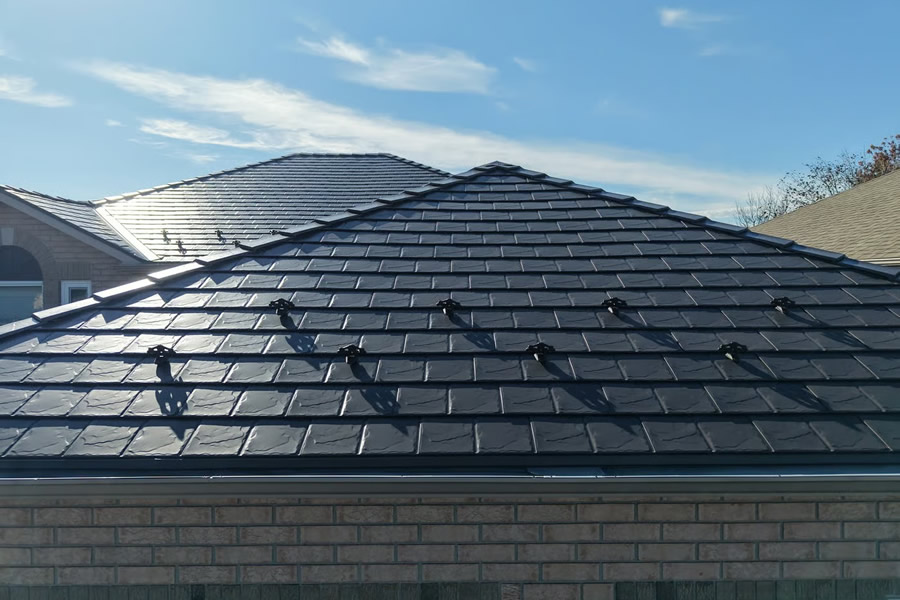
Another reason homeowners choose metal roofing is its architectural appearance. Standing seam metal roofs, for example, create clean vertical lines that complement contemporary homes and many mountain-style properties. Other metal roofing profiles offer a more traditional appearance for homeowners who prefer a different exterior design. Color selection also plays an important role. Charcoal, black, bronze, gray, and other neutral finishes can work well with stone, wood, stucco, and different siding materials.
In Colorado, where residential architecture varies considerably between Denver neighborhoods and mountain communities, the roofing material should complement the design of the house rather than simply follow a trend.
A well-selected metal roof can give a property a distinctive appearance. However, aesthetic improvements do not automatically translate into a specific increase in resale value. Local buyer preferences and the overall condition of the home still matter.
Can Metal Roofing Help With Energy Efficiency?
Energy efficiency is another factor worth examining, although the benefits depend on the complete roofing assembly. Some metal roofing products have reflective finishes that can reduce the amount of solar heat absorbed by the roof. This may help reduce cooling demand during warmer periods, depending on the roof color, insulation, ventilation, and other building characteristics. It is important not to confuse the reflective properties of the exterior material with the overall thermal performance of the house.
Proper attic insulation and ventilation remain essential, particularly in Colorado, where homes must remain comfortable during both hot summers and cold winters.
If energy performance is one of your main reasons for considering metal roofing, ask about the specific product’s reflective properties and how it will work with the existing insulation and ventilation system.
When Does Metal Roofing Make the Most Sense?
Metal roofing may be worth considering if you are planning to remain in your home for many years and want a system designed for long-term use. It can also be attractive if you appreciate its appearance, prefer its maintenance characteristics, or want a roofing material suited to the architectural style of your property. On the other hand, if your existing roof is relatively new, has only isolated damage, or your budget is limited, replacing it with metal may not be the most practical decision. There is also no reason to assume that every home needs the same roofing material. A steeply pitched mountain home, a traditional Denver residence, and a property with a more complex roof design may have very different installation requirements.
Before making a decision, consider the condition of your existing roof, the expected cost of the project, the manufacturer’s specifications, and how long you intend to own the property.
A professional roofing evaluation can help establish whether replacement is necessary and which materials are appropriate for the building.
Choosing the Right Metal Roofing Contractor Matters
Even a high-quality metal roofing product can develop problems if it is installed incorrectly. Panel alignment, fastening, flashing, transitions, and expansion allowances all require attention. Poor installation details can lead to leaks, loose panels, premature deterioration, or other problems that affect the roofing system’s performance.
This is particularly important in Colorado, where temperature changes and severe weather place additional demands on residential roofs.
Before hiring a contractor, ask about experience with the specific metal roofing system you are considering. Review the proposed materials, installation details, warranty information, and the scope of work. It is also worth discussing how existing roofing materials will be handled, whether the roof decking needs inspection, and what protective components will be included in the project.
The quality of the installation is just as important as the material itself.
Is Metal Roofing the Right Investment for Your Colorado Home?
Metal roofing offers several advantages, including durability, different architectural styles, and potentially lower routine maintenance requirements. For homeowners who value these characteristics and plan to stay in their properties for many years, it may be a worthwhile investment. However, the higher initial cost, the specific roofing product, installation requirements, and the condition of the property should all be considered before making a decision.
At Premier Restoration & Construction, we believe that choosing a roofing system should begin with understanding the home and the homeowner’s priorities. Metal roofing is not the right answer for every property, and comparing it with quality asphalt shingles or other roofing options is an important part of the process.
Whether you are considering replacing an aging roof or upgrading to a metal roofing system, our team can help you evaluate your options and understand the work involved.
Contact Premier Restoration & Construction to discuss your residential roofing project and explore metal roofing options for your Colorado home.
Frequently Asked Questions
Is metal roofing worth the extra cost in Colorado?
It can be, particularly for homeowners who value long-term durability and plan to remain in their homes for many years. The decision depends on the specific product, installation cost, maintenance expectations, and the condition of the property.
Does metal roofing hold up well against Colorado hail?
Metal roofing can offer good impact resistance, but performance varies by product. Large hailstones can dent metal panels, so homeowners should review the manufacturer’s impact-resistance information before selecting a system.
Does snow slide off metal roofs?
Snow can slide more easily across some metal roofing surfaces, particularly on steeper roofs. However, the amount and movement of snow depend on roof slope, weather conditions, and surface characteristics. Snow retention systems may be appropriate in certain applications.
Is metal roofing better than asphalt shingles?
Neither material is automatically better for every home. Metal roofing generally has a higher initial cost and offers different durability and maintenance characteristics. Asphalt shingles are often more affordable and provide a wide range of residential styles.
How long does a metal roof last?
Service life varies depending on the metal, coating, installation quality, environmental exposure, and maintenance. Homeowners should review the manufacturer’s documentation for the specific product rather than relying on a general lifespan estimate.
Does metal roofing increase home value?
It may improve the property’s appeal to buyers who value durability, appearance, and reduced maintenance requirements. However, there is no guaranteed increase in resale value, and the outcome depends on local market conditions and the overall property.
Can I replace asphalt shingles with metal roofing?
Yes. Many homes can be converted from asphalt shingles to metal roofing. The project requires evaluating the roof structure, decking, existing materials, ventilation, and installation requirements before selecting the new system.