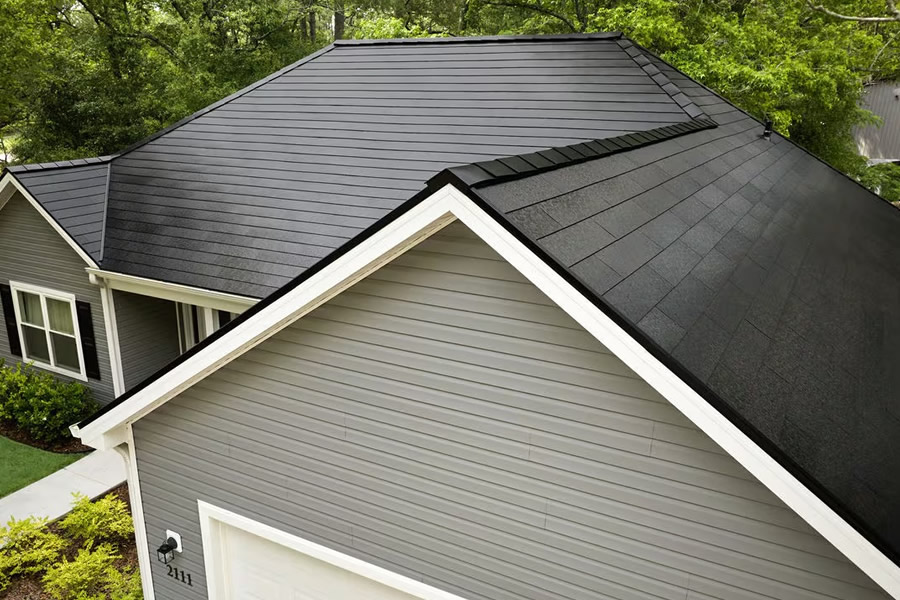
Metal roofing is often chosen for its durability, long service life, and ability to withstand many of the weather conditions that affect homes in Colorado. Compared with some traditional roofing materials, metal roofs generally require less routine maintenance. They do not have individual asphalt shingles that gradually lose granules, curl, or become brittle in the same way.
However, low maintenance does not mean no maintenance. A metal roof is still exposed to intense sunlight, temperature changes, snow, hail, wind, and moisture. Over time, these conditions can affect fasteners, seams, flashing, protective coatings, and other components of the roofing system. Knowing what to inspect and how often to do it can help homeowners identify small problems before they turn into costly repairs.
What Maintenance Does a Metal Roof Actually Need?
Most residential metal roofs do not require complicated maintenance. The goal is to keep the roofing system functioning properly and identify signs of deterioration before water finds its way inside.
One of the most important areas to check is the condition of the fasteners and connections. Some metal roofing systems use exposed fasteners with sealing washers. As the roof expands and contracts with temperature changes, fasteners can loosen or washers can deteriorate. This does not mean every screw needs to be tightened regularly, but it does mean that visible signs of loose fasteners, damaged washers, or openings around attachment points should be evaluated. Seams and panel connections also deserve attention. Depending on the roofing system, panels may be joined through mechanical seams, snap-lock connections, or other fastening methods. These areas are designed to manage water, but damage, improper installation, or deterioration of sealants can create opportunities for leaks.
Flashing is another important part of metal roof maintenance. Roof transitions around chimneys, skylights, vents, walls, and valleys require carefully installed flashing to direct water away from vulnerable areas. Even when the metal panels themselves remain in excellent condition, damaged flashing can compromise the entire roof.
Homeowners should also pay attention to the roof’s protective finish. Modern metal roofing products are manufactured with coatings designed to protect the underlying metal and maintain their appearance. Scratches, damaged areas, or corrosion should be evaluated to determine whether a repair or touch-up is appropriate for the specific material and finish.
How Often Should a Metal Roof Be Inspected?
For most residential properties, having a metal roof professionally inspected about once a year is a reasonable maintenance practice. An additional inspection after a significant hailstorm, strong winds, or another severe weather event can help identify damage that may not be immediately visible from the ground.
Colorado homeowners should be particularly attentive after major storms. Hail can dent metal panels, damage protective finishes, and affect exposed components. Not every dent indicates that a roof has lost its ability to keep water out, but damage should be evaluated rather than dismissed based on appearance alone. Seasonal changes also make inspections useful. Before winter, it is worth checking that flashing, drainage paths, and roof connections are in good condition. After winter, an inspection can help identify damage associated with snow, ice, wind, or repeated temperature changes.
A professional inspection should focus on the entire roofing system, not just the metal panels. The condition of fasteners, seams, flashing, penetrations, gutters, drainage areas, and visible signs of corrosion all contribute to the roof’s performance.
Keep Gutters and Drainage Areas Clear
Although metal roofing is designed to shed water efficiently, proper drainage is still essential. Leaves, branches, dirt, and other debris can accumulate in gutters and valleys, interfering with the movement of rainwater and melting snow. When water cannot drain properly, it may collect around roof edges or other vulnerable areas. Over time, persistent moisture can affect fascia boards, gutter connections, flashing, and adjacent building materials.
Homeowners should periodically check gutters and downspouts to make sure they are clear and securely attached. It is also important to look for signs of water overflowing during rainstorms, since this may indicate a blockage or drainage problem.
Metal roofs should not be treated as completely maintenance-free simply because their smooth surfaces help shed debris. Trees close to the house, accumulated leaves, and damaged drainage components can still create maintenance concerns.
Does a Metal Roof Need to Be Repainted or Resealed?
Not necessarily. Repainting or resealing a metal roof should not be treated as a routine requirement for every property. The need depends on the roofing material, original finish, age, environmental exposure, and the manufacturer’s recommendations. Some metal roofing systems have factory-applied finishes designed to provide long-term protection. Others may require specific maintenance procedures if the coating becomes damaged or begins to deteriorate. Applying an incompatible paint, sealant, or coating can create additional problems rather than solve them.
The same principle applies to roof sealants. Sealant is used in specific locations and applications, but it is not a substitute for properly installed flashing, sound panel connections, or a correctly designed roofing system. If a roof begins to leak, the source should be identified before applying additional sealant.
For this reason, homeowners should avoid purchasing generic roof coatings or applying products without confirming that they are compatible with the particular metal roofing system.
What Can Shorten the Life of a Metal Roof?
Metal roofing is durable, but several factors can affect its long-term performance. Poor installation is one of the most important. Incorrect fastening, improperly detailed flashing, inadequate panel connections, and poorly designed transitions can create problems even when the roofing material itself is high quality. Physical damage is another concern. Falling branches, foot traffic, hail, and improperly installed equipment can dent panels or damage protective finishes. Walking on a metal roof without knowing where and how it can safely support weight may also cause damage or create a safety hazard.
Moisture and corrosion should not be ignored either. The type of metal, protective finish, environmental conditions, and contact with incompatible materials can all influence corrosion risk. Areas where water repeatedly collects or where debris remains trapped deserve particular attention.
In Colorado, changing temperatures add another consideration. Metal naturally expands and contracts as temperatures change. A properly designed system accounts for this movement, but poorly installed components or deteriorating connections can become vulnerable over time.
Is Metal Roofing Still a Low-Maintenance Option?
Yes. When properly installed and maintained, metal roofing can be a relatively low-maintenance option for residential properties. It generally does not require the same type of recurring attention associated with individual asphalt shingles, but it still benefits from periodic inspections and timely repairs.
The key is understanding that durability comes from the entire roofing system, not just the metal panels. Fasteners, flashing, seams, protective finishes, ventilation, and drainage all play a role in keeping the roof watertight. For homeowners in Denver and surrounding Colorado communities, a simple maintenance routine can help preserve the condition of a metal roof and identify potential problems before they affect the interior of the home.
Premier Restoration & Construction brings more than 40 years of experience to residential roofing projects in Colorado. Our team can evaluate the condition of your metal roof, identify areas that may need attention, and help determine whether maintenance, repairs, or a larger roofing project is appropriate.
If your metal roof has not been inspected recently, contact Premier Restoration & Construction to discuss a professional roof inspection and keep your roofing system in good condition.