
- By Premier Admin
- Waterproofing
- 0 Comment
Every spring, Denver commercial and multifamily property owners run the same quiet gamble: the roof got through another winter, so maybe it’ll get through storm season too. Sometimes it does. But the roofs that fail in July almost always showed warning signs in April — signs that were cheap to address before the first hailstorm and expensive to fix after.
This post walks through what to look for on a commercial or multifamily roof heading into Colorado’s storm season, why these signs matter more on large low-slope roofs, and why the window to act is before the weather turns, not during.
If you want the full background on what waterproofing is and how it works, our complete guide to roof waterproofing in Denver is the place to start. This post is about knowing when your building specifically needs it.
Why Storm Season Is the Deadline
Colorado’s storm season doesn’t ease a roof into trouble — it stress-tests every weak point at once. Wind-driven rain finds gaps that a calm drizzle never would. Hail hammers already-brittle membrane. Sudden downpours overwhelm drains that were marginal to begin with, and standing water backs up over seams and flashing.
A small vulnerability that sits harmlessly through mild weather becomes an active leak the moment a real storm hits. Waterproofing before the season is preventative and planned. Waterproofing after a leak is emergency work — more expensive, more disruptive to tenants, and often layered on top of interior water damage that didn’t have to happen. The whole point of watching for these signs is to stay on the cheap side of that line.
The Warning Signs to Watch For
1. Ponding Water That Doesn’t Drain
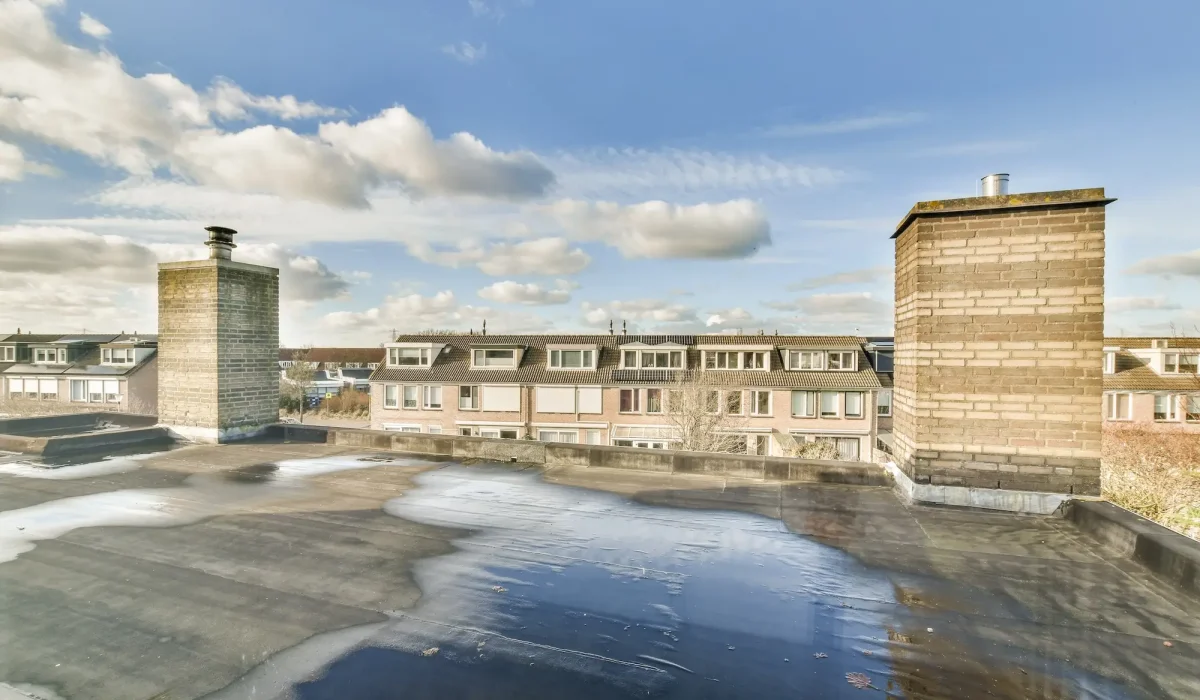
Standing water on a flat or low-slope roof that hasn’t drained within 48 hours is one of the clearest red flags. Ponding accelerates membrane breakdown, adds structural load, and sits directly over the seams most likely to fail. If you’re seeing consistent ponding, your drainage and your waterproofing both need a look before storm season adds volume.
2. Cracked, Blistered, or Lifting Membrane
Walk the roof (or send someone who can) and look at the field of the membrane and its seams. Cracking, blistering, bubbling, or edges that have started to lift are all signs the waterproofing layer is losing integrity. Storm-season wind and hail exploit exactly these weaknesses first.
3. Failing Flashing and Sealant at Penetrations
Flashing around HVAC curbs, scuppers, drains, vents, and parapet walls is where most commercial leaks actually start. Cracked sealant, separated flashing, or rust at these transitions means water has a path in. These details are the first thing a good waterproofing job reinforces — and the first thing a storm finds if they’re neglected.
4. Interior Water Stains or Musty Odors
By the time you see a ceiling stain inside a unit or common area, water has already been getting in for a while. Musty odors, discoloration near the roofline, or tenant complaints about damp spots are downstream symptoms of an upstream roof problem. On a multifamily property, one visible stain often means several hidden entry points.
5. Rising Energy Bills
When moisture gets into roof insulation, that insulation stops working — and your heating and cooling costs climb. An unexplained jump in energy bills across a building can be an early, easy-to-miss sign that the roof is holding water it shouldn’t.
6. Prior Storm Damage That Was Never Fully Addressed
If your roof took hail last season and got a patch-and-move-on repair, storm season is when that shortcut comes due. Partial repairs leave a roof with mismatched wear and unaddressed weak points that the next storm reopens.
Why Multifamily Roofs Need Extra Attention
Multifamily and apartment properties carry complications a single-tenant commercial building doesn’t. There are usually multiple roof sections at different ages and conditions, shared drainage systems, and — most importantly — residents whose units flood when the roof fails. A leak isn’t just a maintenance ticket; it’s tenant displacement, damage claims, and reputation.
That’s also why inspection matters so much here. It’s genuinely difficult to eyeball the condition of a large, multi-section roof from the ground, which is why many property managers now use drone inspections for multifamily roofing to catch developing problems across the whole roof before storm season turns them into leaks.
What to Do If You’re Seeing These Signs
If any of the above sounds like your building, the move is a professional roof inspection now — while it’s still a planning decision and not an emergency. An inspection identifies exactly where waterproofing is needed, flags any repairs that have to happen first, and gives you a clear scope before the weather forces your hand.
Depending on what the inspection finds, the right answer might be targeted waterproofing at your most vulnerable points, a full membrane or resealing system across the roof, or waterproofing folded into a broader maintenance plan. The point is to decide on your schedule, not the storm’s.
Get Ahead of Storm Season
The cheapest waterproofing project is the one you do before you need it. The most expensive is the one you do at 2 a.m. with water coming through a tenant’s ceiling.
Contact Premier Restoration & Construction to schedule a commercial or multifamily roof inspection before Colorado’s storm season arrives. We’ll assess your roof’s current condition and give you a straight answer on whether waterproofing now can save you from a much bigger bill later.