- By tecmobeto
- Commercial Roofing, Commercial Roofing Services
- 0 Comment
If you manage or own a commercial building in Denver with a flat or low-slope roof, there’s a good chance EPDM is either already on your building or has come up in a conversation with a roofing contractor. It’s one of the most widely used commercial roofing membranes in the country — and for good reason. When it’s installed correctly and maintained properly, it’s one of the most reliable systems available for Colorado’s demanding climate.
This guide covers everything commercial property owners in the Denver metro need to know about EPDM: what it is, how it performs in Colorado conditions, how it compares to alternatives like TPO, what installation looks like, and how to know when your EPDM roof needs attention.
What is EPDM roofing?
EPDM stands for Ethylene Propylene Diene Monomer — a synthetic rubber membrane engineered specifically for flat and low-slope roofing applications. It’s been used on commercial buildings for over 60 years, which gives it one of the longest performance track records of any modern roofing material.
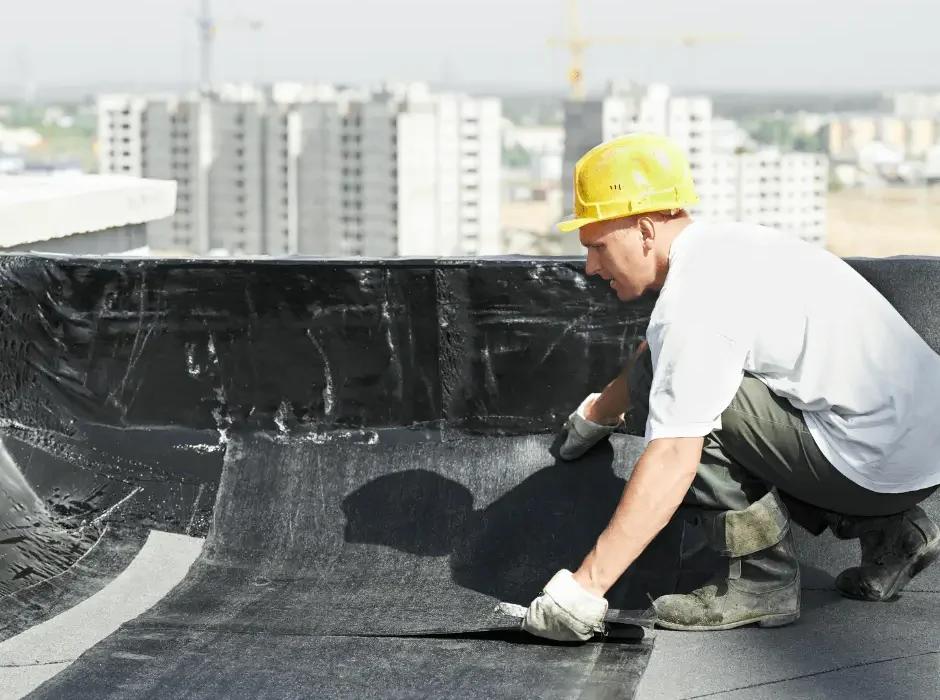
EPDM comes in large factory-manufactured sheets — typically 10 to 50 feet wide — that are rolled out across a roof deck and secured using one of three methods: fully adhered (glued down), mechanically fastened (screwed through the membrane and deck), or ballasted (held down by a layer of gravel or pavers). Seams between sheets are sealed using tape or liquid adhesive.
The material is available in two colors: black, which is the traditional and most common option, and white, which has become increasingly popular for its energy efficiency benefits. The choice between them has real implications for Colorado buildings, which we’ll cover below.
How does EPDM perform in Colorado’s climate?
Denver’s climate is harder on roofing systems than most people realize. Elevation means more intense UV radiation year-round. The Front Range sees dramatic temperature swings — it can be 70 degrees in the afternoon and below freezing by midnight. Heavy spring hailstorms, significant snow loads, and rapid freeze-thaw cycles stress every component of a roofing system.
EPDM handles this environment well for several reasons:
- Exceptional flexibility. EPDM remains pliable in very cold temperatures — down to -40°F — without cracking or becoming brittle. This is critical for Colorado’s freeze-thaw cycles, which cause rigid materials to crack at seams and penetrations over time.
- UV resistance. EPDM’s carbon-black composition (in black membranes) provides inherent UV resistance that doesn’t degrade significantly over time. This matters at Denver’s 5,280-foot elevation, where UV intensity is meaningfully higher than at sea level.
- Long lifespan. Properly installed EPDM systems routinely last 25 to 30 years, with some installations lasting 40 years or more with good maintenance. That’s a strong return on a commercial roofing investment.
- Hail performance. Thicker EPDM membranes (60 mil and above) offer solid resistance to impact damage from hail. While no membrane is hail-proof, EPDM’s rubber composition absorbs impact rather than fracturing like some harder materials.
- Moisture resistance. EPDM is highly resistant to water intrusion and doesn’t absorb moisture. Seams are the primary vulnerability in any membrane system, and proper installation with quality seam tape virtually eliminates that risk.
Is EPDM energy efficient?
This is one of the most common questions we get about EPDM — and the answer depends on which version you choose.
Black EPDM
Black EPDM absorbs solar heat rather than reflecting it. In Colorado’s climate, this is actually an advantage for a significant portion of the year. Denver averages around 300 days of sunshine annually, and the Front Range experiences cold winters where solar heat gain through a dark roof membrane can meaningfully reduce heating costs. For buildings in colder microclimates — Summit County, mountain towns, or north-facing exposures — black EPDM often makes the most practical and economic sense.
White EPDM
White EPDM reflects sunlight, reducing heat gain and lowering cooling costs in summer. If your building is in a warmer location, houses heat-generating equipment, or has significant air conditioning costs, white EPDM or a roof coating applied over black EPDM can reduce cooling loads noticeably. White membranes also carry ENERGY STAR ratings, which may be relevant for green building certifications or utility rebate programs.
The honest answer for most Denver commercial buildings: the climate here is mixed enough that either option can make sense depending on your building’s specific use, orientation, and HVAC profile. It’s worth discussing with your roofing contractor rather than defaulting to one or the other.
EPDM vs. TPO: which is right for your Denver building?
EPDM and TPO (Thermoplastic Polyolefin) are the two most commonly specified membranes for commercial flat roofs in the Denver area. Both are solid systems — the right choice depends on your building’s specifics.
- Seaming method. TPO seams are heat-welded, creating a fused bond that’s very strong when done correctly. EPDM seams use adhesive tape, which performs well but requires proper surface prep and temperature conditions during installation. Both are reliable in skilled hands.
- Color options. TPO’s white membrane is its default and most popular form, making it the standard choice when energy efficiency and reflectivity are the primary goals. EPDM’s flexibility in both black and white gives it an edge in climates like Colorado’s where both heat retention and heat rejection have seasonal value.
- Track record. EPDM has been in use for 60+ years. TPO has a shorter history (roughly 30 years) but has established a strong performance record. EPDM’s longer track record gives some property owners and specifiers added confidence, especially for long-term hold properties.
- Cost. Both systems are competitively priced at similar thickness and specification levels. Material costs are comparable; labor varies based on installation method and roof complexity.
- Repairability. EPDM is straightforward to repair. Patches adhere well and can be applied quickly, even in cold weather. This is a practical advantage for Denver’s shoulder seasons when weather windows for roof work can be narrow.
For most standard flat-roof commercial buildings in Denver, either system performs well. For buildings in colder or higher-altitude locations, or where winter heating costs are a primary concern, EPDM’s heat-absorbing properties and cold-weather flexibility often tip the scale.
Can EPDM be installed over an existing roof?
In many cases, yes. Installing EPDM over a single existing roofing layer — sometimes called a “roof-over” — is a legitimate and code-compliant option when the existing substrate is structurally sound, dry, and relatively flat. The advantages are real: reduced tear-off labor and disposal costs, less disruption to building operations, and a faster installation timeline.
However, a roof-over is not always the right call. Before recommending it, Premier conducts a thorough assessment that includes:
- Moisture scanning or core cuts to verify there’s no trapped moisture in the existing membrane or insulation. Installing a new membrane over wet insulation accelerates deterioration and can void the new system’s warranty.
- Structural review to confirm the deck can support the added weight of a second roofing layer.
- Local code verification — some jurisdictions and building types limit the number of roofing layers permitted.
- Condition assessment of the existing membrane, seams, and penetrations.
If the existing roof is in poor structural condition or has significant moisture intrusion, a full tear-off is the right approach. Cutting corners here costs more in the long run.
What does EPDM installation look like?
A commercial EPDM installation by Premier follows a consistent process designed for quality and minimal business disruption:
1. Inspection and scoping
We start with a free inspection and detailed scope of work. This covers existing membrane condition, insulation, drainage, penetrations, and any areas needing remediation before the new system goes down.
2. Tear-off or prep
If a full tear-off is required, we remove the existing roofing material down to the deck, inspect the decking for soft spots or damage, and replace compromised sections before proceeding. If a roof-over is appropriate, we prep the existing surface and address any problem areas.
3. Insulation
Proper insulation is installed beneath the membrane to achieve the required R-value for energy code compliance. In Colorado, commercial roofing insulation requirements are meaningful — we make sure your project meets current standards.
4. Membrane installation
EPDM sheets are rolled out, positioned, and secured using the specified attachment method. Seams are carefully prepared, primed, and sealed with high-quality seam tape or adhesive. Flashing is installed around all penetrations — HVAC curbs, pipes, drains, parapet walls — with extra attention paid to these high-risk areas.
5. Final inspection and documentation
We walk the completed roof with you, review all seams and flashings, verify drainage is functioning correctly, and provide documentation of the completed installation. If the project involves a manufacturer warranty, we handle the registration process.
How to know when your EPDM roof needs attention
Regular inspection is the single most effective way to extend the life of an EPDM roof. Watch for these signs between inspections:
- Shrinkage or pulling at seams and flashings. EPDM can shrink over time, particularly on older installations, causing membranes to pull away from walls and penetrations. This is one of the more common failure modes on aging EPDM roofs.
- Ponding water. Standing water 48 hours after rain indicates a drainage problem. Prolonged ponding accelerates membrane aging and seam stress.
- Visible cracks or punctures. Usually caused by foot traffic, falling debris, or mechanical equipment. Small punctures are straightforward to repair when caught early.
- Blistering or bubbling. Air or moisture trapped beneath the membrane creates blisters. This indicates adhesion failure and needs prompt attention.
- Deteriorating seams. Seams that have lifted, wrinkled, or separated are the primary leak source on EPDM roofs and should be addressed immediately.
Premier offers commercial preventative maintenance programs that include scheduled inspections, minor repair work, and documentation — so problems are caught and addressed before they become expensive.
How much does commercial EPDM roofing cost in Denver?
Commercial EPDM costs vary based on roof size, attachment method, insulation requirements, existing roof condition, and penetration complexity. As a general range, Denver commercial property owners typically invest between $5 and $10 per square foot for a new EPDM installation, with full tear-off and insulation upgrades moving costs toward the higher end.
For a precise number on your building, an in-person inspection and detailed estimate is the only reliable approach. Premier provides free commercial roof inspections and written estimates with no obligation.
Why Denver commercial property owners choose Premier for EPDM
Premier Restoration & Construction is based in Centennial and has completed commercial EPDM installations and repairs across the Denver metro — from small retail buildings to large industrial and multi-tenant properties. We work with property owners, property managers, and building engineers, and we’re familiar with the permit requirements, code considerations, and climate-specific installation practices that matter for Colorado buildings.
We’re also experienced with the insurance side of commercial roofing. If your EPDM roof has sustained hail or storm damage, we document everything thoroughly and work directly with your adjuster to make sure all damage is properly included in the claim.
Ready to talk about your building? Request a free commercial roof inspection at premier303.com or call 303-773-6437.