
- By Premier Admin
- Waterproofing
- 0 Comment
If you’ve started looking into roof waterproofing, the first question is almost always the same: what’s this going to cost? It’s a fair question, and an annoying one to answer honestly, because the real answer is it depends — on your roof size, its current condition, the material you choose, and whether waterproofing is a standalone job or bundled with repairs.
That said, “it depends” doesn’t help you budget. So this guide breaks down real cost ranges for both residential and commercial roof waterproofing in the Denver metro area, explains what actually moves the price, and helps you understand where your project is likely to land before you ever call a contractor.
For the bigger-picture view of what waterproofing is and how it works, start with our complete guide to roof waterproofing in Denver. This post focuses specifically on the numbers.
What Roof Waterproofing Costs in Denver (Quick Ranges)
Waterproofing is priced per square foot, and the range is wide because “waterproofing” covers everything from a targeted flashing detail to a full liquid-applied membrane over a commercial roof. Here’s where Denver-area pricing typically falls:
Residential Waterproofing
- Flashing and sealant work (targeted areas): $400 – $1,500 per project
- Liquid-applied membrane (flat/low-slope sections): $3.00 – $7.00 per square foot
- Underlayment systems (installed with a new roof): $1.00 – $3.00 per square foot
Commercial & Multifamily Waterproofing
- Acrylic-based waterproofing systems: $1.50 – $3.50 per square foot
- Silicone membrane systems: $2.50 – $5.50 per square foot
- Polyurethane / multi-layer systems: $4.00 – $7.00 per square foot
For comparison, full commercial roof replacement typically runs $10–$20+ per square foot, which is exactly why so many property owners look at waterproofing first. We cover that trade-off in detail in our post on commercial roof coating cost, lifespan, and ROI.
What Actually Affects Your Waterproofing Cost
Two roofs of the same size can come back with very different quotes. Here’s what drives the difference.
Roof Size and Accessibility
Bigger roofs cost more in total but often less per square foot. Accessibility matters too — a ground-level porch roof is cheaper to work on than a multi-story commercial roof that requires equipment, safety staging, or lift access.
Current Roof Condition
This is the big one. Waterproofing over an already-damaged roof doesn’t hold, so any deteriorated decking, failed seams, or worn flashing has to be repaired first. A roof in good shape needs only prep and application. A neglected roof needs repair work before waterproofing even begins — and that’s where budgets stretch.
Material and System Choice
Acrylic systems cost less upfront but have a shorter lifespan. Silicone and polyurethane cost more but hold up far better against Denver’s intense UV exposure and freeze-thaw cycling. The cheapest material isn’t the cheapest choice if it fails in five years.
Drainage and Ponding Issues
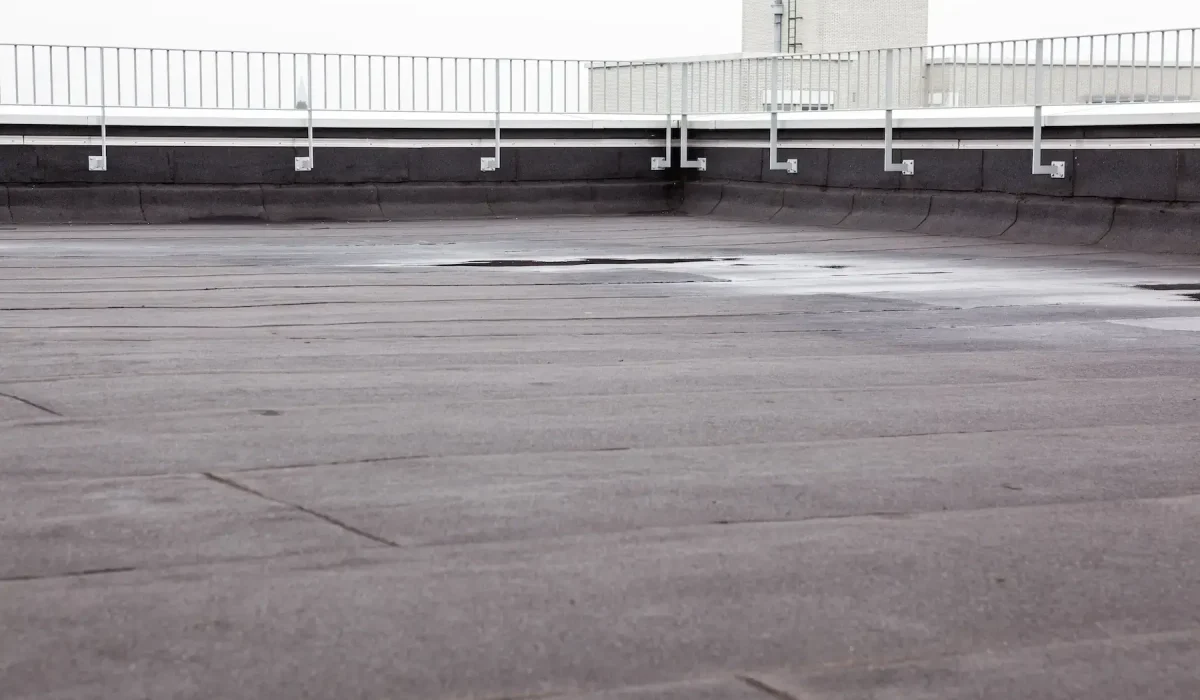
Flat and low-slope roofs that hold standing water need drainage corrections before waterproofing, or the new system sits in the same puddles that damaged the old one. Fixing ponding adds cost but protects the investment.
Number of Penetrations
Every vent, skylight, HVAC curb, scupper, and drain is a spot where water wants to get in — and each one needs detailed hand-work. A roof with lots of penetrations costs more to waterproof than a clean, open surface of the same size.
Residential vs. Commercial: Why the Pricing Differs
Homeowners are usually waterproofing specific vulnerable areas — a flat porch roof, the flashing around a chimney, sections prone to ice dams. These are smaller, more targeted projects, so the total cost is lower even though the per-square-foot rate can be higher.
Commercial and multifamily properties are waterproofing large, low-slope roof systems, often as part of a broader preventative maintenance program. The per-square-foot rate is lower, but the total square footage is far greater. Multifamily properties add complexity on top of that — multiple roof sections, shared systems, and the need to schedule work around residents. If you manage an apartment complex or condo community, expect a scoped, phased estimate rather than a single flat number.
Is Waterproofing Worth It vs. Replacement?
For most Denver roofs that are aging but still structurally sound, waterproofing is the more cost-effective path by a wide margin. You’re looking at a fraction of replacement cost, minimal disruption, and often years of added roof life. It also tends to be treated as a maintenance expense rather than a capital expenditure — a meaningful advantage for commercial owners and property managers.
Waterproofing stops making sense when the underlying roof is genuinely failing: saturated insulation, compromised decking, or a system that’s simply reached the end of its life. In those cases you’d be spending money to waterproof something that needs to be replaced. A professional inspection is the only reliable way to know which side of that line your roof falls on.
Get an Accurate Waterproofing Quote
Every range in this post is a starting point, not a quote. The only way to know what your specific roof will cost is to have someone look at it — assess the condition, measure the square footage, count the penetrations, and check the drainage.
Contact Premier Restoration & Construction for a free roof inspection and a straightforward waterproofing estimate. We’ll give you real numbers for your property — and an honest recommendation on whether waterproofing, coating, or repair is the right call.